 Deluan Quintão
ab2f1b45de
Deluan Quintão
ab2f1b45de
* perf(subsonic): keep album/mediafile params on stack in response helpers

Two helpers were forcing their entire value parameter onto the heap via
pointer-to-field aliasing, adding one full-struct heap allocation per
response item on hot Subsonic endpoints (search3, getAlbumList2, etc.).

- childFromMediaFile assigned &mf.BirthTime to the returned Child,
  pulling the whole ~1KB model.MediaFile to the heap on every call.
- buildDiscSubtitles passed &a.UpdatedAt to NewArtworkID inside a loop,
  pulling the whole model.Album to the heap on every album with discs.

Both now copy the time.Time to a stack-local and use gg.P / &local so
only the small time.Time escapes. Verified via go build -gcflags=-m=2:
moved to heap: mf and moved to heap: a are gone at these sites.

* perf(metadata): avoid per-track closure allocations in PID computation

createGetPID was a factory that returned nested closures capturing
mf model.MediaFile (~992 bytes) by reference. Since it is called three
times per track during scans (trackPID, albumID, artistID), every track
triggered the allocation of three closures plus a heap copy of the full
MediaFile.

Refactor the body into package-level functions (computePID, getPIDAttr)
that take hash as an explicit parameter and the inner slice.Map callback
to an indexed for loop, removing the closure-capture of mf entirely.
trackPID/albumID/artistID now call computePID directly.

The tiny createGetPID wrapper was kept only for tests; move the
closure-building into the test file so production has no dead API.

Verified via go build -gcflags=-m=2 on model/metadata: no
"moved to heap: mf" anywhere in persistent_ids.go, and the callers in
map_mediafile.go / map_participants.go no longer heap-promote their
MediaFile argument.

Navidrome Music Server 








Navidrome is an open source web-based music collection server and streamer. It gives you freedom to listen to your music collection from any browser or mobile device. It's like your personal Spotify!
Note: The master branch may be in an unstable or even broken state during development.
Please use releases instead of
the master branch in order to get a stable set of binaries.
Check out our Live Demo!
Any feedback is welcome! If you need/want a new feature, find a bug or think of any way to improve Navidrome, please file a GitHub issue or join the discussion in our Subreddit. If you want to contribute to the project in any other way (ui/backend dev, translations, themes), please join the chat in our Discord server.
Installation
See instructions on the project's website
Cloud Hosting
PikaPods has partnered with us to offer you an officially supported, cloud-hosted solution. A share of the revenue helps fund the development of Navidrome at no additional cost for you.

Features
- Handles very large music collections
- Streams virtually any audio format available
- Reads and uses all your beautifully curated metadata
- Great support for compilations (Various Artists albums) and box sets (multi-disc albums)
- Multi-user, each user has their own play counts, playlists, favourites, etc...
- Very low resource usage
- Multi-platform, runs on macOS, Linux and Windows. Docker images are also provided
- Ready to use binaries for all major platforms, including Raspberry Pi
- Automatically monitors your library for changes, importing new files and reloading new metadata
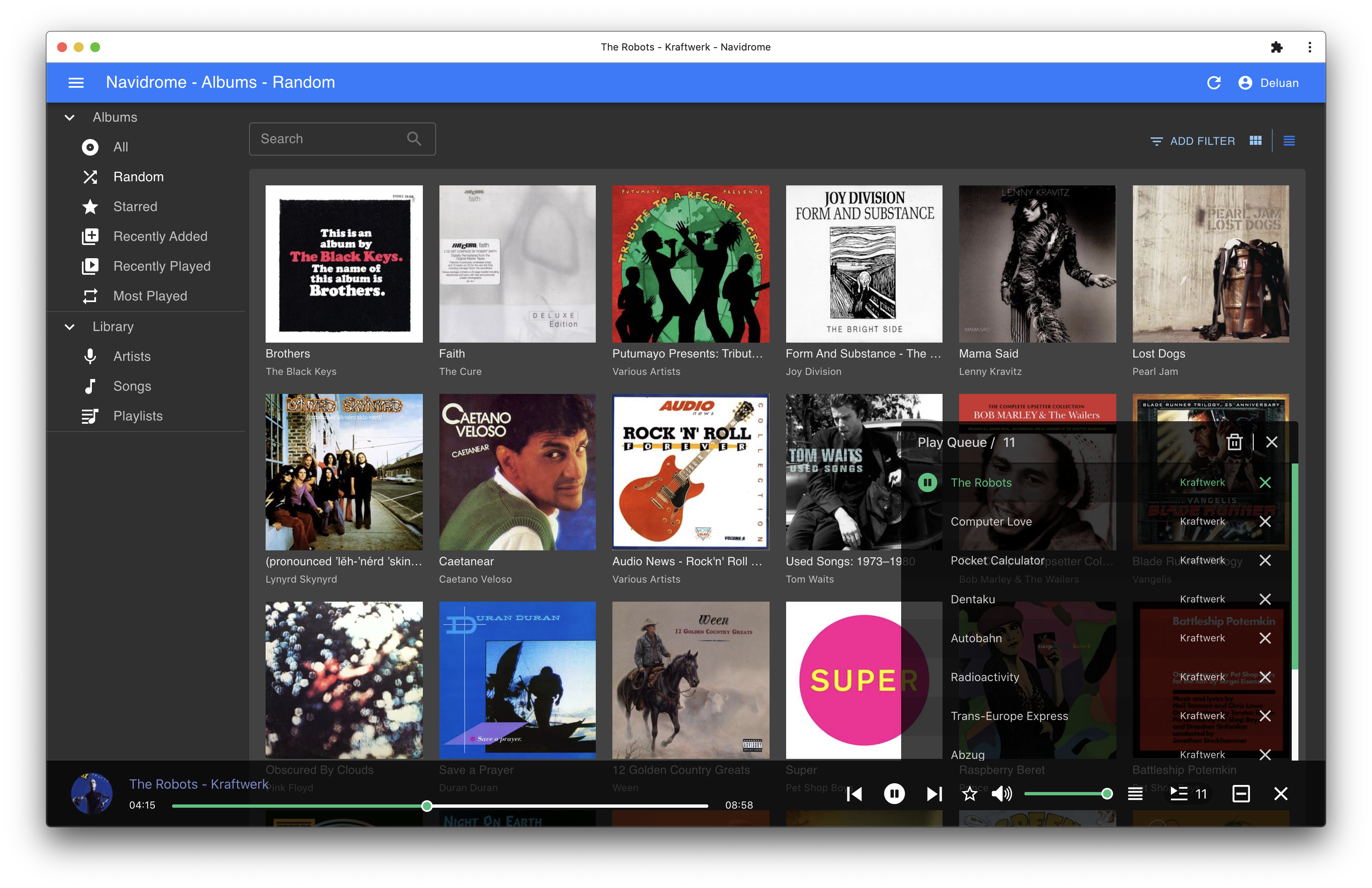
- Themeable, modern and responsive Web interface based on Material UI
- Compatible with all Subsonic/Madsonic/Airsonic clients
- Transcoding on the fly. Can be set per user/player. Opus encoding is supported
- Translated to various languages
Translations
Navidrome uses POEditor for translations, and we are always looking for more contributors
Documentation
All documentation can be found in the project's website: https://www.navidrome.org/docs. Here are some useful direct links:
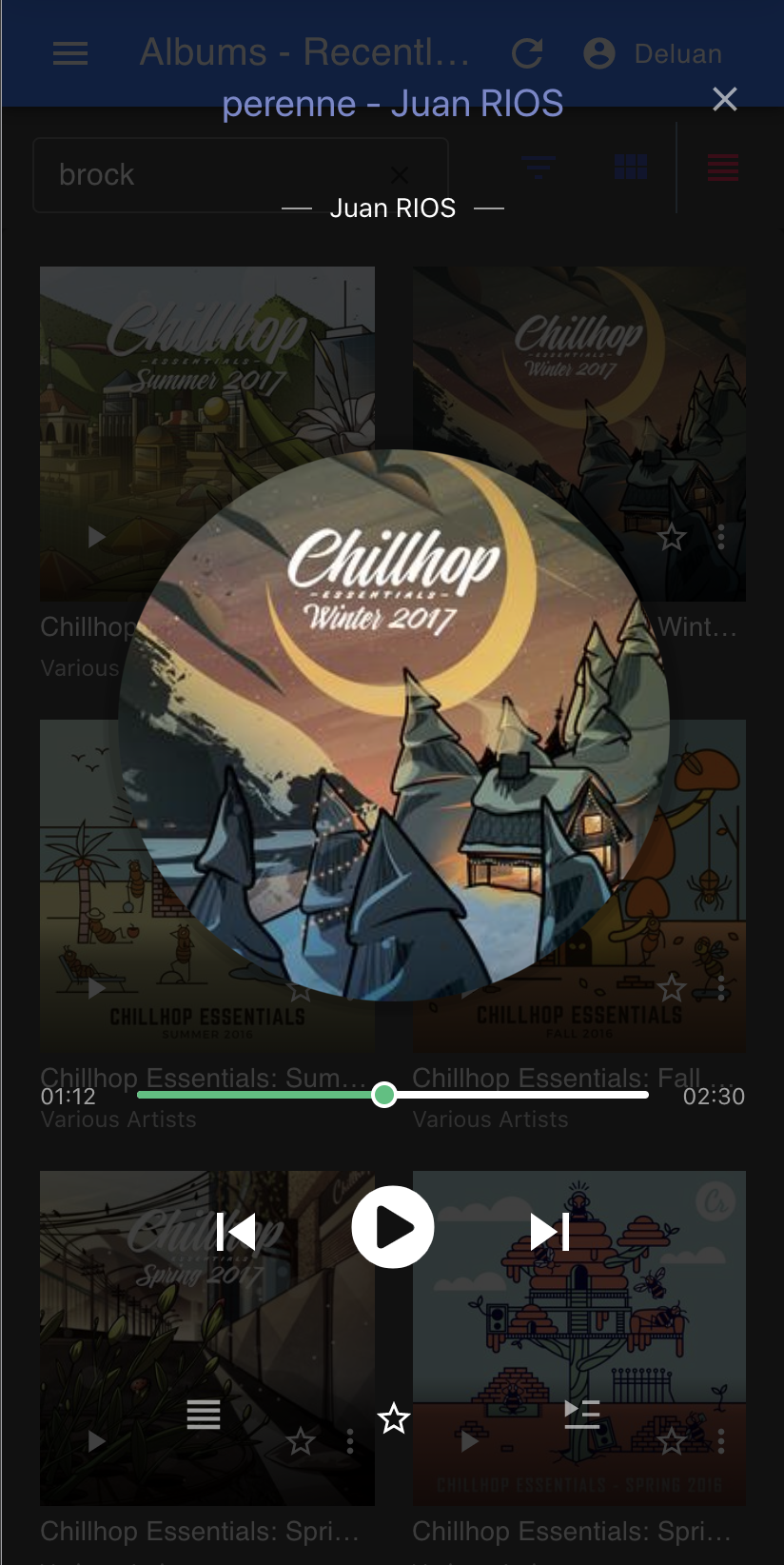
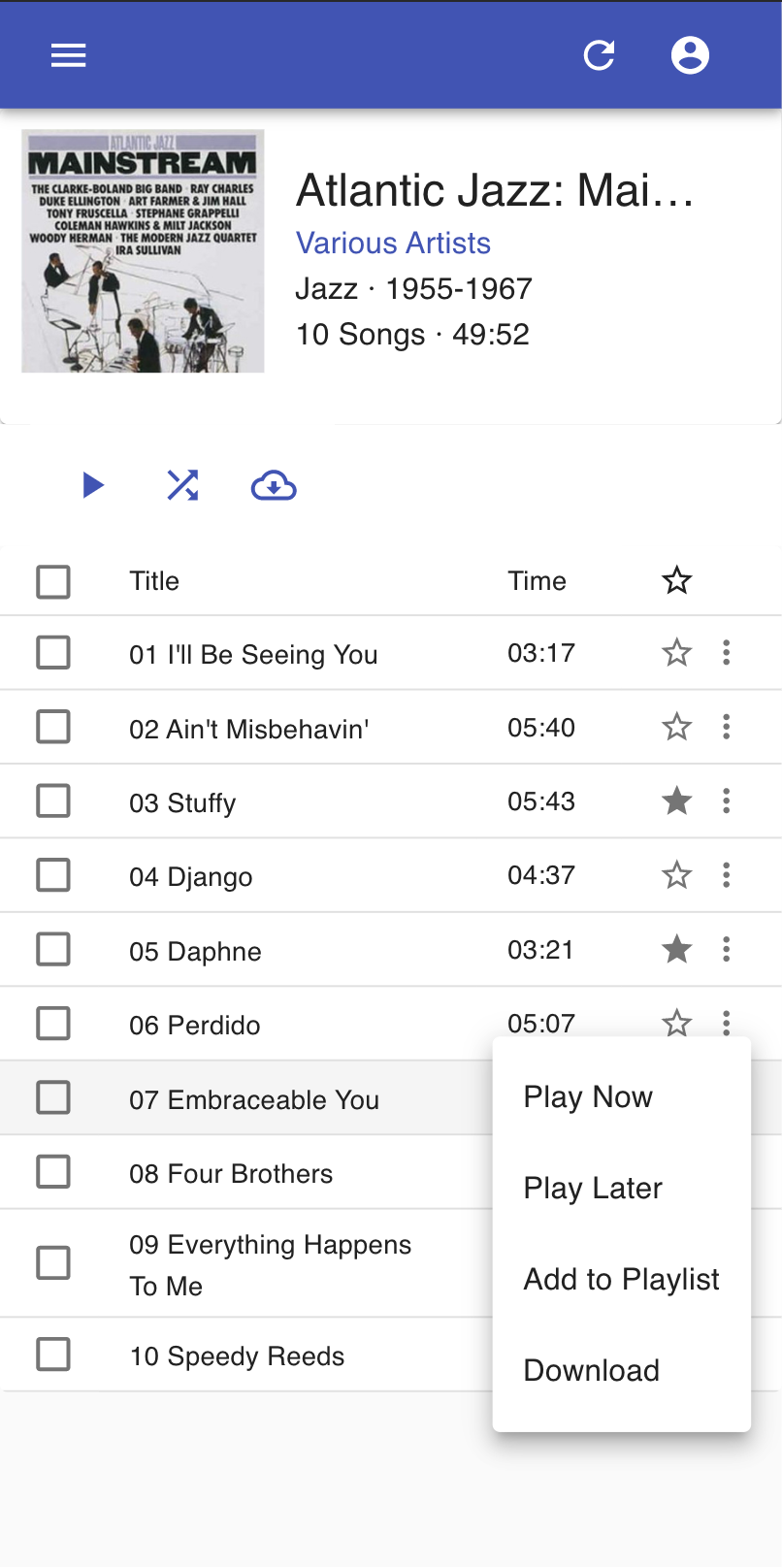
Screenshots